
Practice that adapts. Progress you can read.
Your child continues each lesson at home, at the right level, with a tutor that asks questions instead of giving answers. Every week you get one short picture of what has stuck.
Ten minutes a day. One clear picture a week.
An example week of ten-minute sessions.
A new lesson, explained step by step.
Practice at the right level.
A worked example where it got tricky.
Monday's lesson comes back for review.
Explain it back, in their own words.
Free.
Your weekly picture arrives.
It asks. It never just tells.
When your child is stuck, the tutor asks the next useful question. It never sees the answer key, and a second check stops it from giving answers away.
What has stuck, in plain words.
One short summary each week: what your child has mastered, what they're practising, and where they need help. No rankings, no scores to compare.
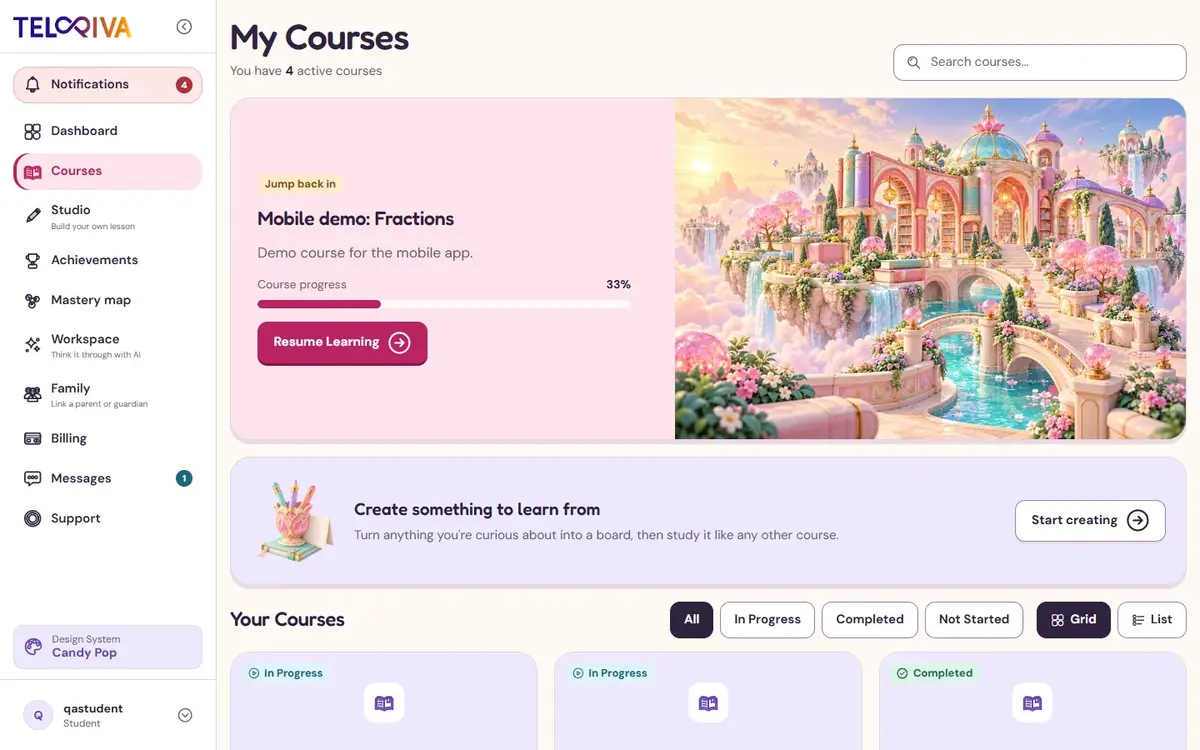
Learning they want to come back to.
Every lesson is interactive: pupils drag, sort, build and answer, instead of reading. And the whole app can look like their kind of world.
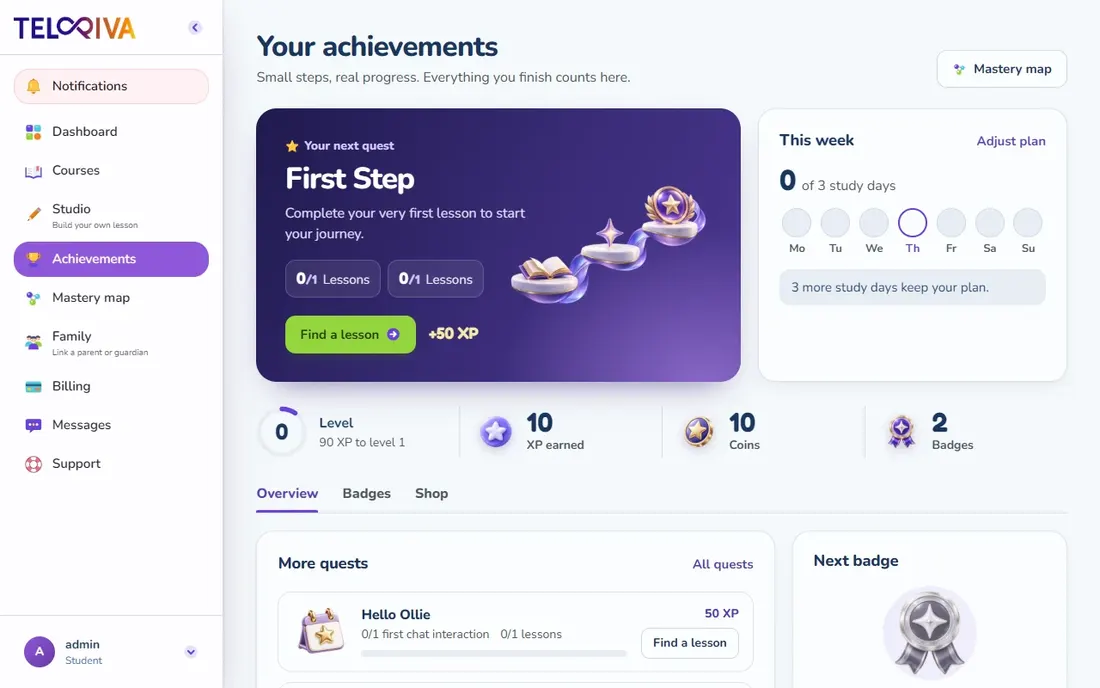
Rewards for understanding, not for clicking.
Most points come from truly understanding an idea.
Small goals, like finishing a first lesson.
Milestones they can see and be proud of.
Study days to aim for, not a streak to protect.
Built for children, not for clicks.
The things we decided before writing a line of code.
Nobody can look up your child. Families link with a code, confirmed from both sides.
Points and badges stay private unless a class chooses a nickname board.
Reading fonts for dyslexia and lessons read aloud.
The app and your family's data are hosted in Germany.
No ads, no ad tracking, no targeting. Ever.
Ask us and your child's data is deleted. No questions, no hoops.
Two minutes. We reply within two working days.
No commitment. We read every application ourselves and suggest a short call if it's a fit.
- You apply here.
- A 20-minute call: your topic, your class, your questions.
- We build your first lesson with you.
Good questions.
How do we start?
Through your child's school or tutor, or directly through the parent pilot.
How much screen time is it?
About ten minutes a day is enough. The weekly plan never pushes daily streaks.
Which subjects?
Whatever your child is learning: lessons are built from the topic or a page of their schoolbook.